
When we talk about food, we spend a lot of time talking about fuel, nutrients, and calories. What often gets left out of the conversation is pleasure.
Most of us have been taught to treat eating like a math problem to solve or a habit to control. Even the everyday language we use around food carries a heavy dose of shame.
We call a rich dessert “sinful,” label our favorite snacks “guilty pleasures,” or joke about needing to “be good” at dinner.
Those phrases might seem harmless, but they quietly sabotage our relationship with food. Pleasure and guilt simply cannot exist in the same bite. When you attach a word like “sinful” to a food, you trigger a small wave of stress and shame the moment you eat it. That stress actually gets in the way of your brain’s ability to taste, enjoy, and feel satisfied by your meal.
When you don’t feel satisfied, you end up wandering back to the kitchen looking for more food to fill a void that only genuine enjoyment could have closed.
There is an approach to eating called Intuitive Eating—a framework created by dietitians Evelyn Tribole and Elyse Resch that helps people rebuild trust with their bodies instead of following strict diet rules. This framework is foundational in the work I do with clients.
At the very center of this approach is one core idea: satisfaction. Think of satisfaction as the hub of a wheel. When you allow yourself to actually enjoy your food, every other healthy habit becomes much easier to maintain.
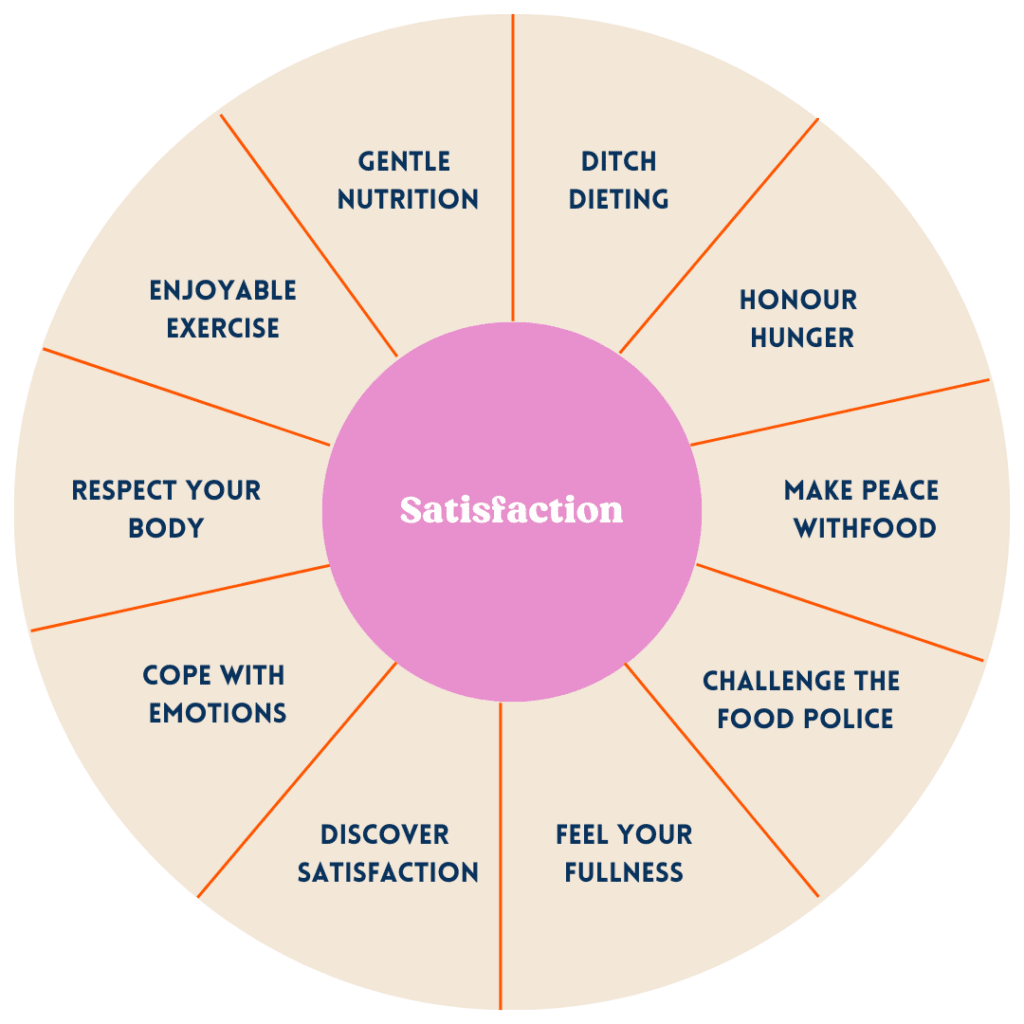
When you allow yourself to actually enjoy your food, every other healthy habit becomes much easier to maintain…and food and our relationship with it becomes less stressful and more peaceful.
How Satisfaction Connects All the Other Principles
Satisfaction isn’t just a nice bonus; it’s the anchor that makes every other principle of Intuitive Eating work:
- Rejecting the Diet Mentality & Challenging the Food Police: You can’t enjoy a meal if a voice in your head is tallying your vegetable intake or calling your food “bad.” Satisfaction asks you to drop the moral labels so you can simply ask, “What actually sounds good right now?”
- Making Peace with Food: Unconditional permission takes the urgency out of eating. When chocolate is always allowed, it stops being a “guilty pleasure” you have to sneak or earn with a plate of broccoli.
- Honoring Your Hunger: Knowing you get to eat food you actually enjoy makes it much easier to respond to gentle, early hunger cues rather than waiting until you are starving.
- Feeling Your Fullness: Fullness is physical (a stretched stomach), while satisfaction is mental and sensory. You can be physically stuffed with vegetables and still feel unsatisfied. When you eat what you truly crave, satisfaction arrives right alongside physical fullness, making it easy to stop comfortably.
- Coping with Your Emotions with Kindness: Understanding sensory satisfaction helps you tell the difference between wanting a specific taste and needing emotional comfort, rest, or stress relief.
- Respecting Your Body & Joyful Movement: Letting go of guilt allows you to care for your body through pleasant meals and movement that feels good, rather than punishment.
- Honoring Your Health (Gentle Nutrition): Satisfaction is what makes nutrition sustainable. Instead of forcing down plain veggies out of obligation, gentle nutrition asks how you can prepare nutrient-dense foods in ways you actually love to eat
Fullness vs. Satisfaction: Why They Are Not the Same Thing
One of the biggest reasons we struggle to stop eating comfortably is that we confuse fullness with satisfaction. They are two completely different signals, and your body needs both to feel truly finished with a meal.
- Fullness is physical. It is the simple, biological sensation of your stomach stretching as it fills up with food and liquid. You could drink a gallon of water or eat a massive bowl of plain lettuce and feel physically stuffed.
- Satisfaction is mental and sensory. It is the sense of pleasure, contentment, and “that hit the spot” that comes from eating something with the taste, texture, and temperature you actually wanted.
When you eat a large volume of food that doesn’t appeal to you, you end up physically full yet mentally hungry. Your stomach says stop, while your brain says keep looking.
True contentment happens when physical fullness and sensory satisfaction meet at the same time—which is why eating a food you truly love in a way and amount that feels good to you often leaves you feeling done much faster than eating a huge portion of diet food.
The “Phantom Food” Trap: What Happens When We Eat Around a Craving
When we ignore pleasure and chase fullness with the “wrong” foods, we fall into a habit called eating phantom foods. That is what happens when you try to eat around a craving instead of just honoring it.
A client of mine recently shared a great example of this. She was craving a piece of chocolate. Just as she thought about reaching for it, a critical voice in her head chimed in: “I haven’t eaten enough vegetables today. I should eat those first.” So, she skipped the chocolate and forced down a bowl of veggies instead.
The result? Her stomach was full, yet she felt completely unfulfilled. She ended up grazing on other snacks trying to scratch that itch, and eventually ate the chocolate anyway. By the time she finally had what she wanted, she felt overly full, frustrated, and disconnected from her body.
Eating around a craving almost always leads to eating more food with less enjoyment. Had she simply eaten the piece of chocolate first, savored it without guilt, and moved on, she would have experienced true satisfaction—and probably felt genuinely ready for some vegetables later on.
Why Satisfaction Changes Everything Else
When you stop fighting your cravings and make room for enjoyment, it creates a ripple effect across the rest of your eating habits:
- You stop feeling out of control around “off-limits” foods. When chocolate is genuinely allowed, it stops being a “guilty pleasure” that you have to sneak or earn with a plate of broccoli. Taking away the guilt takes away the urgency.
- You tune into your body’s natural cues. It is much easier to notice when you are getting hungry—and when you have had enough—when you are paying attention to how your food actually tastes and feels, rather than following an external set of rules.
- Healthy eating actually sticks. Nutrition becomes sustainable when pleasure is part of the equation. Instead of forcing down plain vegetables out of obligation, you start looking for ways to prepare nutrient-dense foods with flavors, textures, and seasonings you genuinely love.
- You recognize what you really need. Paying attention to satisfaction helps you tell the difference between wanting a specific taste and needing something food cannot fix, like rest, comfort, or stress relief.
How to Practice Satisfaction in Real Life
If you have spent years ignoring your preferences, figuring out what you actually enjoy can take a little practice. Here are a few simple ways to start bringing satisfaction back to your table:
- Pause and ask what sounds good. Before opening the fridge out of habit, take ten seconds to ask yourself: “What am I actually in the mood for?” Notice the specific qualities you want—do you want something warm or cold, crunchy or creamy, sweet or savory, light or hearty?
- Upgrade your everyday meals. You don’t have to settle for bland food in the name of health. Add butter, olive oil, flaky salt, cheese, or a great sauce to your vegetables. Put your lunch on a real plate instead of eating out of a plastic container. Add variety so that you aren’t eating the same foods over and over. Small upgrades turn a chore into a meal you actually look forward to.
- Eat without rushing or multitasking. It is hard to feel satisfied by food you barely noticed eating. Even if you only have ten minutes, try stepping away from your laptop or putting down your phone so your brain can actually register the flavors and textures.
- Do a mid-meal check-in. About halfway through eating, pause for a breath and check in with your taste buds. Does the food still taste as good as the first few bites? Are you starting to feel satisfied, or do you need a bit more? Checking in helps you notice when you have had enough without relying on strict portion rules.
- Drop the moral labels. Catch yourself when you call a food “bad,” “junk,” or “sinful.” Try describing the food neutrally instead—like rich, sweet, crispy, or comforting—so you can enjoy it without a side of guilt.
The Bottom Line
Eating is meant to be pleasurable. Say it with me. Eating is meant to be pleasurable!
When you strip enjoyment out of your meals—or wrap your favorite foods up in words like “sinful” and “guilty”—you disconnect from your body’s natural stopping cues.
The next time you notice yourself reaching for a “healthy” substitute to avoid what you really want, pause and ask if you are chasing a phantom food. Sometimes, the kindest, most balanced thing you can do for your body is to drop the guilt and just eat the chocolate.
Ready to take the guilt out of eating?
Unlearning years of diet rules and reconnecting with what you actually enjoy isn’t always easy to do on your own—and you don’t have to figure it out by yourself. If you’re tired of feeling stuck in the cycle of food guilt, phantom cravings, and second-guessing every meal, I would love to support you.
Reach out to book a free discovery call to learn more about working together. I would love to support you in building a peaceful and satisfying relationship with food.
0 Comments